Can You Shower, Swim or Wash Dishes With Press-On Nails?
Quick answer
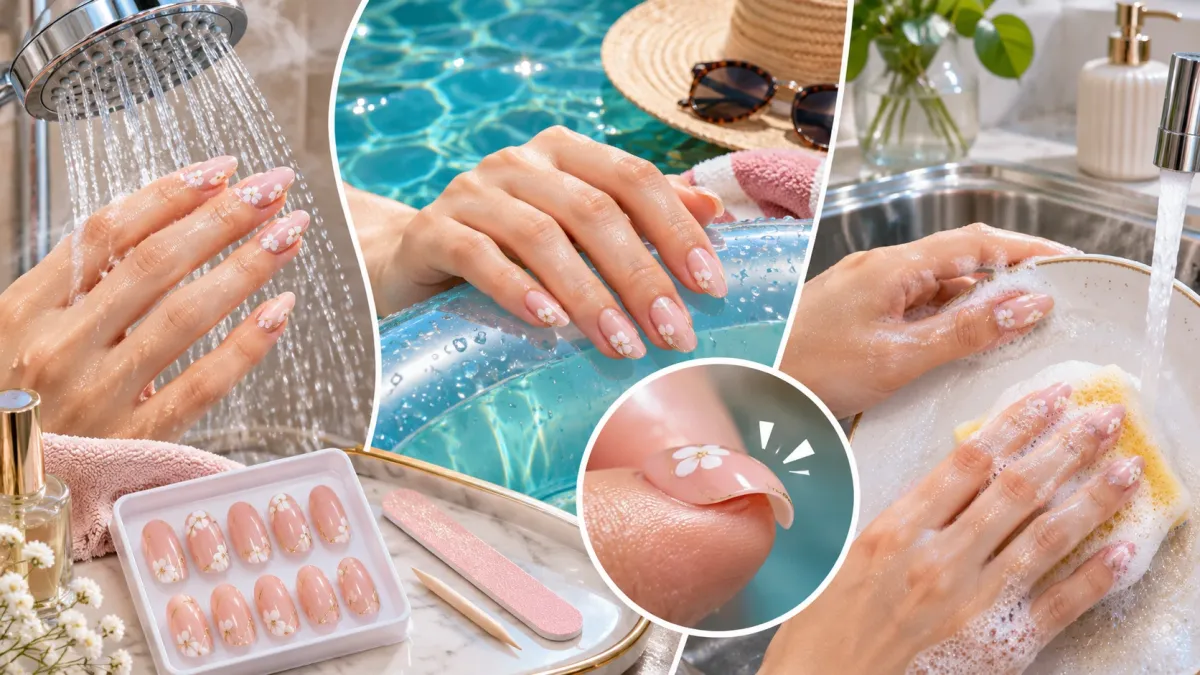
Yes, you can shower with press-on nails once the adhesive has had at least an hour to set. After that, normal showers, hand washing and hair washing are fine. Long soaks in hot water, baths, hot tubs, saunas and dishwater shorten wear the most, so keep showers warm and short, wear gloves for dishes and dry your hands well.
In this guide
Water is part of every day, so it is natural to wonder how press-ons handle it. The short answer is reassuring: a well-applied set handles showers, hand washing and even a swim. The longer answer is that how much water, how hot, and how soon after applying all change how long your set lasts.
Below, I go through each situation. For the full set of habits that keep press-ons on, see my guide to making press-ons last longer.
Can you shower with press-on nails? Quick answers
| Activity | OK? | Tip |
|---|---|---|
| Hand washing | Yes | Dry hands and nail edges well |
| Showering and washing hair | Yes, after the first hour | Warm, not hot; keep it short |
| Washing dishes | With gloves | Hot dishwater is hard on adhesive |
| Swimming | Short swims, yes | Wait a day after applying; use glue, not tabs |
| Baths and hot tubs | Shortens wear | Keep hands out of the water |
| Sauna and steam room | Shortens wear | Heat softens adhesive |
The first hour matters most
Nail glue sets in seconds, but the bond keeps strengthening after that. Glamnetic advises waiting at least 1 hour before exposing a new set to water or heat, and says normal hand washing and showers are fine after that. Nailboo also recommends keeping nails dry for at least an hour.
Plan around it. The easiest routine is to shower first, dry off, wait a little so your nails are fully dry, and then apply your set. That way your first contact with water is the next day. For more on timing, see holding times and when you can get wet.
Showering and washing your hair
Showers are fine. Long, hot showers are the problem. Warm water slowly softens nail glue at the edges, which is exactly why soaking is one of the standard removal methods. A 10-minute warm shower is very different from a 30-minute hot one.
- Keep the water warm rather than hot, especially in the first day or two.
- Use your fingertips, not your nails, to massage shampoo into your scalp. Scratching levers the tips upward.
- Pat your hands dry after the shower and check the edges. A towel rubbed hard can catch a tip.
Washing dishes and cleaning
Dishwater is often the harshest water your nails meet: hot, soapy and long. Licensed beauty consultant Sarah Roberts told Simplemost that you should wear gloves when washing dishes or cleaning, because prolonged hot water weakens adhesive.
Rubber gloves solve most of this. They also protect your set from cleaning products and from knocks against pots and sinks. If you hand wash dishes every day, gloves will add days to every set. For anyone who does a lot of housework, I suggest cotton-lined rubber gloves, which Mayo Clinic recommends for washing dishes, cleaning and harsh chemicals; the lining soaks up sweat, so your nails stay dry inside the glove too.
Can you swim with press-on nails?
Yes, for normal swims. Dashing Diva, for example, describes its pre-glued Magic Press nails as waterproof for up to 7 days. Glamnetic says its Quick Press Mani nails handle brief water exposure, but that prolonged soaking in pools, the ocean or baths may reduce adhesion.
Doo Nails adds that long contact with salt water or chlorinated water may weaken adhesive and shorten wear. For a beach vacation or a swimming day, I would:
- Apply with nail glue rather than tabs, at least a day before.
- Choose a short or medium length.
- Rinse your hands in fresh water after swimming and dry them well.
- Pack glue and a few spare tips, in case one nail comes loose.
If you are packing for a trip, my press-on travel kit list covers the rest.
Baths, hot tubs, saunas and steam
Baths, hot tubs and saunas combine heat and long exposure, which is the hardest test for any adhesive. Glamnetic notes that extreme heat may cause adhesive to soften and lose bonding strength. If your hands are often in water, Doo Nails recommends nail glue over adhesive stickers, because glue is much more water-resistant.
You do not have to skip them. In a bath or hot tub, rest your hands on the edge instead of under the water. Keep sauna sessions short and dry your hands afterward. Expect a set to come off a little sooner if you do these often.
A water-friendly daily routine
Most people do not need to change their life for press-ons, just a few small habits. This is the routine I suggest to anyone whose hands are often wet:
- Apply in the evening, after your shower and after the dishes, so the set has the whole night to settle.
- Keep gloves by the sink so you actually use them, not just own them.
- Dry under the free edge after washing your hands. Water sitting there slowly works its way back toward the glue.
- Put hand cream on after drying, and keep it on your skin rather than rubbing it into the nail edges.
- Use your finger pads for scrubbing and tasks in water, so the tips are not levered while the glue is soft.
For other everyday questions, like typing, sleeping and putting in contact lenses, see my guide to everyday tasks with press-ons.
Are press-on nails waterproof?
Press-ons are water-resistant rather than waterproof. A good bond keeps water from getting under the tip, but nothing holds forever under hot water. How well a set handles water depends mostly on three things:
- The adhesive. Glue resists water better than tabs. Tabs soften faster with warm water, so they suit shorter wear; my comparison of glue and tabs explains the difference.
- The fit. Gaps at the sides or cuticle let water in. A tip that sits flush, with no air pockets, keeps it out.
- The prep. Oil left on the nail weakens the bond from the start, and water finds those weak spots first.
Realistic wear times for each adhesive are in my guide to how many days press-ons stay on.
After water: a 30-second check
A quick habit after a shower or swim catches problems early:
- Dry your hands thoroughly, including around each nail edge.
- Look at each nail from the side. A lifted edge shows as a gap or a cloudy patch.
- If an edge has lifted, dry it fully, add a tiny drop of glue underneath and hold for 10 seconds.
Do not seal a lifted edge over trapped water. If a nail has stayed wet underneath, take it off, dry both surfaces and reattach it; my guide to reattaching one press-on shows how. If nails keep coming off after water, see the most common reasons press-ons fall off.
Hygiene note: if water gets trapped under a press-on and the nail starts to look green, yellow or discolored, remove the set and let the nail dry out. If the color stays or the skin is sore, see a doctor or dermatologist.
Sources
- Glamnetic help center: Adhesive and wear support
- Glamnetic help center: Can I wear Quick Press Mani nails to the pool or beach?
- Sally Beauty: Dashing Diva Magic Press directions
- Doo Nails support: Are press-ons water-resistant?
- Simplemost (via Scripps News): Are press-on nails safe?
- Nailboo help center: Application and wear
- Mayo Clinic: Fingernails, do's and don'ts for healthy nails
Frequently asked questions
How long after applying press-on nails can I shower?
Wait at least an hour so the adhesive can set. The easiest routine is to shower first and apply your nails afterward, so they stay dry until the next day.
Are press-on nails waterproof?
Press-ons are water-resistant, not waterproof. A good bond keeps water out during normal washing and showers, but long soaks in hot water slowly soften the adhesive.
Can you swim in a pool or the sea with press-on nails?
Yes, for normal swims. Apply with glue at least a day before, rinse with fresh water afterward, and dry your hands well. Long sessions in salt or chlorinated water can shorten wear.
Do press-on nails come off in hot water?
Long exposure to hot water loosens nail glue, which is why warm soapy water is used for removal. Keep showers warm and short and wear gloves for dishes.
Can I wash dishes with press-on nails?
Yes, but wear rubber gloves. Hot, soapy dishwater is one of the main reasons sets come off early, and gloves also protect the tips from knocks.

Written by Ome Jack
I'm Ome Jack, the owner and writer of OmeNails. I've worked with nails for 11 years and run my own nail business. Here I write step-by-step guides on choosing, applying, fixing and removing press-on nails, based on years of hands-on work with real clients'…
More about Ome