Why Do My Press-On Nails Hurt? Causes & Easy Fixes
Quick answer
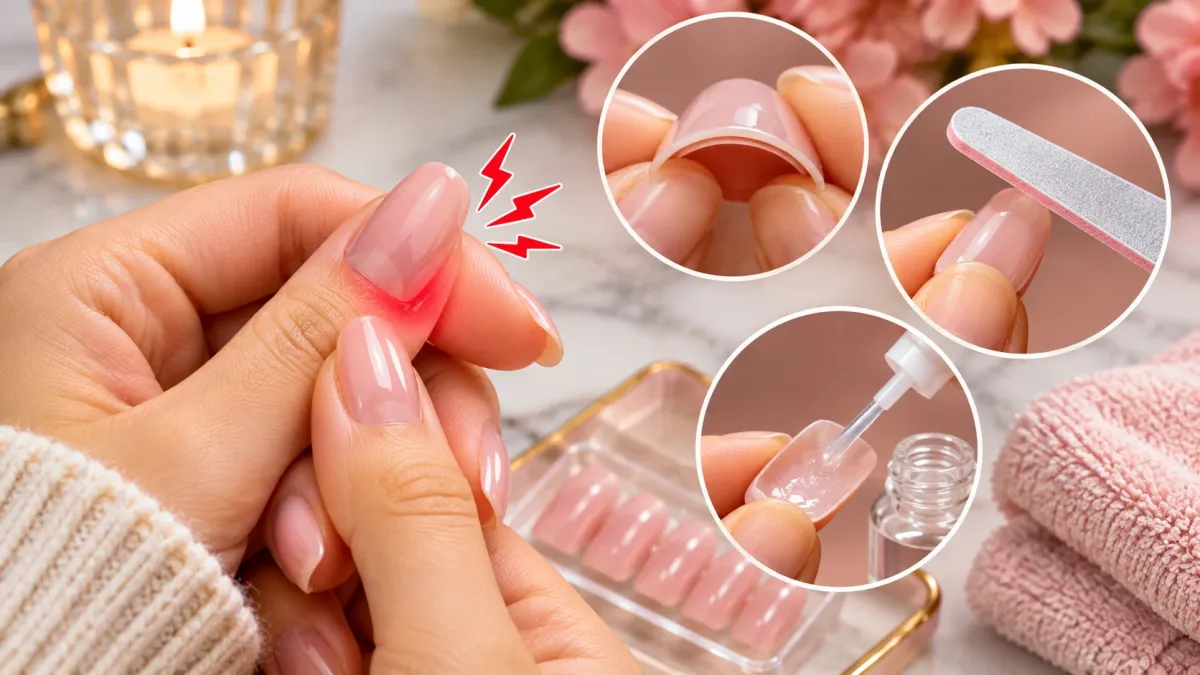
Press-on nails usually hurt because the tip is too small or more curved than your natural nail, so it squeezes the nail from the sides. Pressing too hard, a long length, or glue on the skin can add to it. Soak off any nail that throbs or pinches and replace it with a larger or flatter size.
In this guide
- Why do my press-on nails hurt? The common causes
- 1. The tip is too small
- 2. The curve is tighter than your nail
- 3. Too much pressure when applying
- 4. The nails are too long
- 5. Glue on the skin or irritation
- Should you wait for it to settle?
- How to remove a press-on that hurts
- Why do my nails hurt after removing press-ons?
- How to prevent painful press-ons
- Sources
Press-ons should feel like nothing once they are on. A little awareness in the first hour is normal, the way a new ring feels at first, but throbbing, pinching or soreness is not. Pain is a signal that something about the fit is wrong.
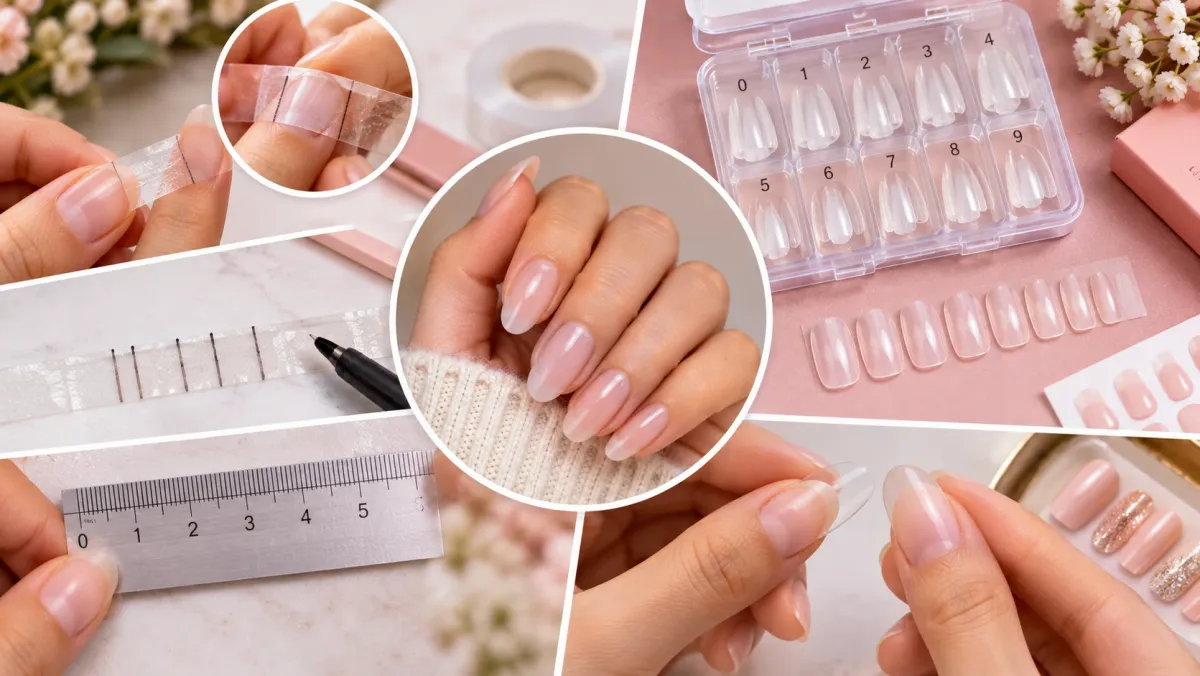
The cause is almost always mechanical and easy to fix. Here is how to find it. Most fit problems trace back to sizing, which I cover in depth in my press-on sizing guide.
Why do my press-on nails hurt? The common causes
| What you feel | Likely cause | Fix |
|---|---|---|
| Pinching or throbbing at the sides | Tip too small | Soak off, size up and file to fit |
| Pressure across the nail | Tip more curved than your nail | Choose a flatter tip or a different brand |
| Sore right after applying | Pressed down too hard | Use firm but gentle pressure next time |
| Aching when you tap or type | Length too long, natural nail too long | Shorten the tips, keep natural nails short |
| Stinging or itching on the skin | Glue on the skin, or irritation | Remove glue, stop if it continues |
1. The tip is too small
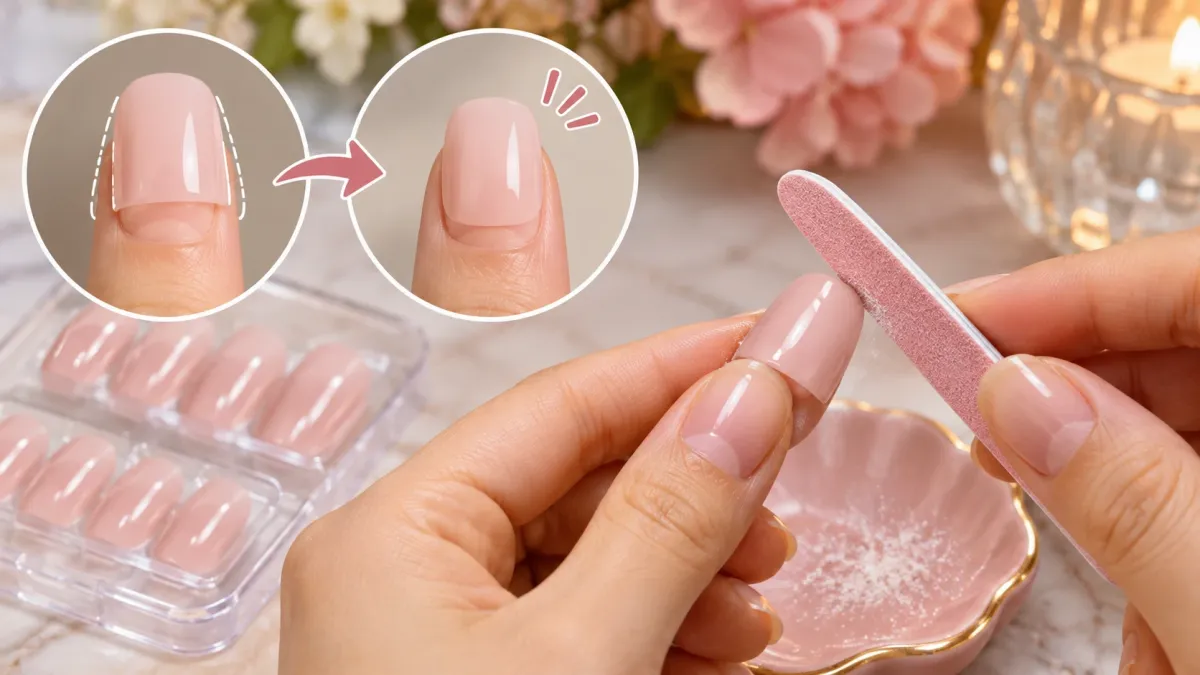
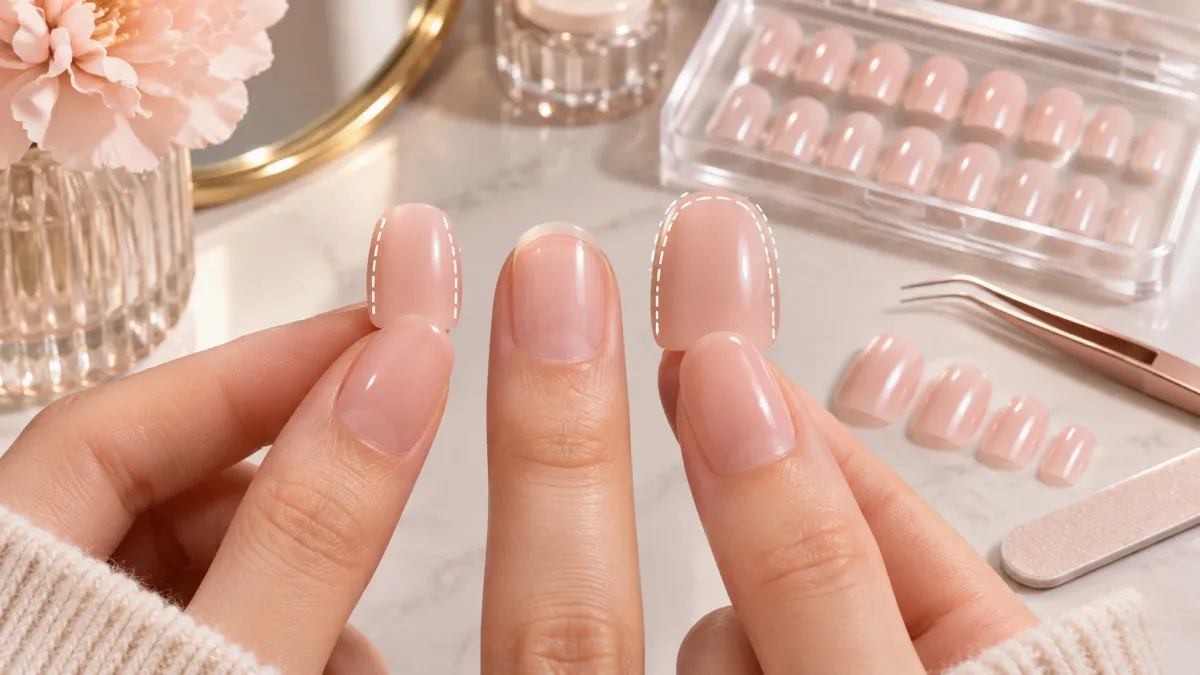
A tip that is too small is the most common cause of pain. When the tip is narrower than your nail, pressing it flat forces it to squeeze the sides of your nail. BTArtbox, a press-on brand, describes this as pressure on the nail bed that can cause throbbing pain, especially at the sides.
Another clue is cracking. Hello Love, another brand, notes that hairline cracks usually mean the size is too small and was pushed down too hard.
Fix: soak the nail off and use the next size up, filing the sides if needed. My guide to fixing press-ons that are too narrow covers what to do if no size in the box is wide enough.
2. The curve is tighter than your nail
Even the right width can hurt if the tip is more curved than your nail. A strongly curved tip pressed onto a flatter nail tries to bend your nail to its shape. Doonails' support team lists a curve stronger than the natural nail as one of the main reasons press-ons hurt.
Fix: choose a flatter tip or a brand whose curve suits you. If a tip is only slightly too curved, I find adhesive tabs can cushion the difference; if it is much more curved, I switch to a flatter brand rather than forcing it. If you have flat nails, my guide to getting press-ons to fit flat nails goes further.
3. Too much pressure when applying
Pressing hard on a tip that is slightly too small or too curved forces it to fit, and your nail takes the strain. You need firm, steady pressure to seal the adhesive, not a crushing grip.
Fix: press firmly enough to seal the center and sides and hold for 20 to 30 seconds, but if you feel discomfort while pressing, stop: the tip does not fit.
4. The nails are too long
Long tips act like levers. Every tap on a keyboard or bump against a surface pulls on the bond and pushes on your nail, which can cause an ache. A natural nail that is too long inside the tip adds to it by pushing the tip up.
Fix: keep your natural nails short before applying, and shorten long tips for everyday wear. My guide to shortening press-ons without cracking them shows how.
5. Glue on the skin or irritation
Glue that seeps onto the skin hardens and pulls as you move, which can sting. Some people also react to ingredients in nail adhesives; dermatologist Dr. Hannah Kopelman told NBC Select that sensitive skin can react with irritation or allergy.
Fix: use a thin layer of glue that stays on the nail, and remove any from the skin gently; see removing nail glue from your skin. If itching, redness or a rash continues, stop using that product.
Should you wait for it to settle?
A feeling of mild awareness that fades within the first day can be normal while you get used to a new set, especially if you have never worn press-ons before. Doonails' support team notes that pressure from pressing a nail on too firmly is usually temporary and should ease by the next day. Pain that throbs, pinches or gets worse is different, so do not wait it out. If a nail still feels tight the morning after, I take it off and refit it rather than wait longer. When someone tells me a new set feels tight, my first question is where: pinching at the sides usually points to a tip that is too small, and pressure across the top to a curve that is too tight.
Soak off any nail that hurts and replace it with a better-fitting size. One wrong nail can be redone in a few minutes without touching the rest of the set; my guide on reapplying a single press-on explains how.
Take the set off and see a doctor if the skin around a nail becomes red, swollen, hot or tender, if the pain keeps getting worse, or if you notice discoloration under the nail. Cleveland Clinic lists swelling, redness or tenderness around the nail, and nail discoloration, as signs of infection.
How to remove a press-on that hurts
Do not rip off a painful nail. Soak it in warm, soapy water with a little oil for 10 to 15 minutes, then gently lift the side with a wooden stick. If it still holds, soak longer. My full guide to removing press-ons safely covers all methods.
Why do my nails hurt after removing press-ons?
Soreness after a set comes off is a different problem from a tip that pinches. It can mean the surface of your natural nail was thinned, for example by prying a nail off before the glue softened, or by heavy buffing before the set went on. Dr. Kopelman told NBC Select that removal is where she sees most of the damage, and that over-buffing thins the nail.
A thinned nail can feel tender to pressure, heat and cold until healthier nail grows through. While it recovers:
- Leave your nails bare for a while, and keep them short so they do not bend.
- Massage in cuticle oil and a hand cream once or twice a day.
- Skip buffing until the tenderness has gone.
- Next time, soak the set until each nail releases on its own.
My advice is to treat that tenderness as a signal to wait: no new set until every nail feels firm and comfortable again. My post-removal nail care routine covers the steps in detail. If a nail stays painful, lifts from the nail bed, or shows discoloration, swelling or redness, see a doctor or dermatologist.
How to prevent painful press-ons
- Size every finger, and when in doubt between two sizes, test the smaller one by pressing it flat. If it pinches, go larger and file. My guide on choosing between two sizes explains this test.
- Match the curve as well as the width.
- Keep natural nails short and choose a sensible length.
- Use thin layers of glue, kept off the skin.
- Press firmly but never force a tip to fit.
If a tip is the right curve but too wide, you can file it to fit; see how to file wide press-ons.
Sources
Frequently asked questions
Is it normal for press-on nails to hurt?
No. Mild awareness that fades within the first day can be normal, but throbbing or pinching means the fit is wrong. Soak off the nail that hurts and choose a better size or curve, and see a doctor if the pain continues once the nail is off.
Why does my press-on nail throb?
Throbbing usually means the tip is too small or too curved and is squeezing your nail from the sides. Remove it and use a larger or flatter size; if the throbbing continues once it is off, see a doctor.
Can press-on nails be too tight?
Yes. A tip that is narrower than your nail has to be forced flat, which puts pressure on your nail and can crack the tip. A good fit sits flat with gentle pressure.
How do I stop my press-ons from hurting?
Size every finger, match the curve, keep your natural nails and the tips at a sensible length, use thin glue kept off the skin, and never force a tip that does not fit.
When should I see a doctor about press-on pain?
Remove the set and see a doctor if the skin around a nail is red, swollen, hot or tender, if the pain keeps getting worse, or if the nail becomes discolored.
Written by Ome Jack
I'm Ome Jack, the owner and writer of OmeNails. I've worked with nails for 11 years and run my own nail business. Here I write step-by-step guides on choosing, applying, fixing and removing press-on nails, based on years of hands-on work with real clients'…
More about Ome