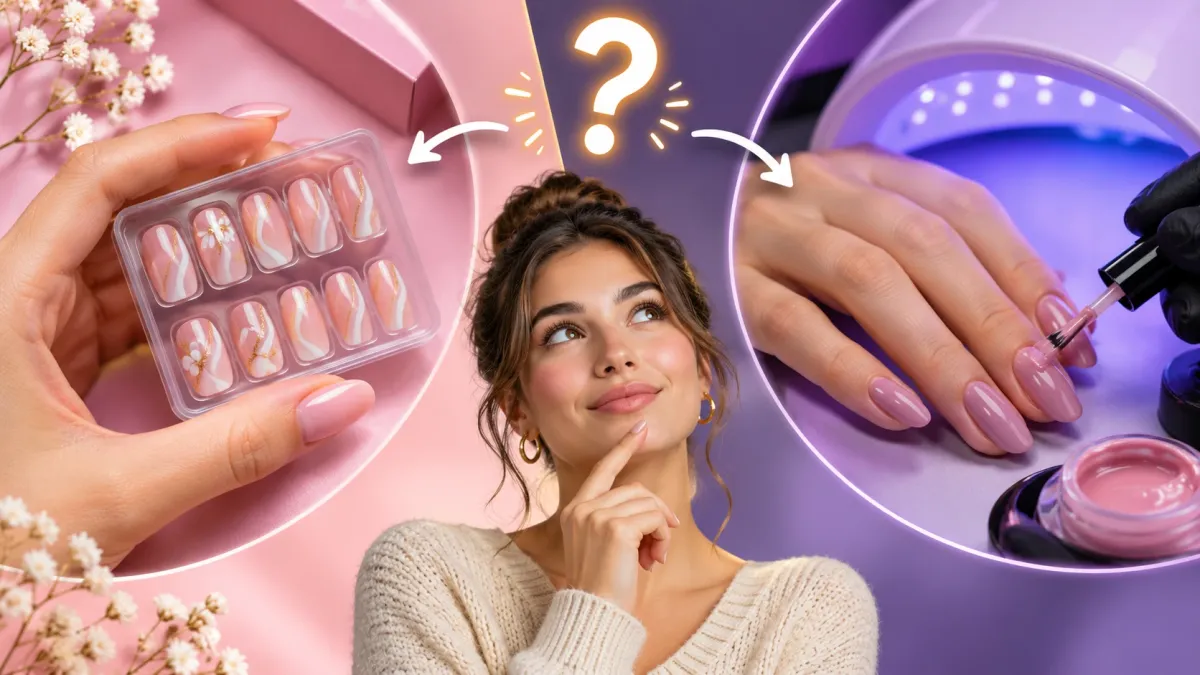
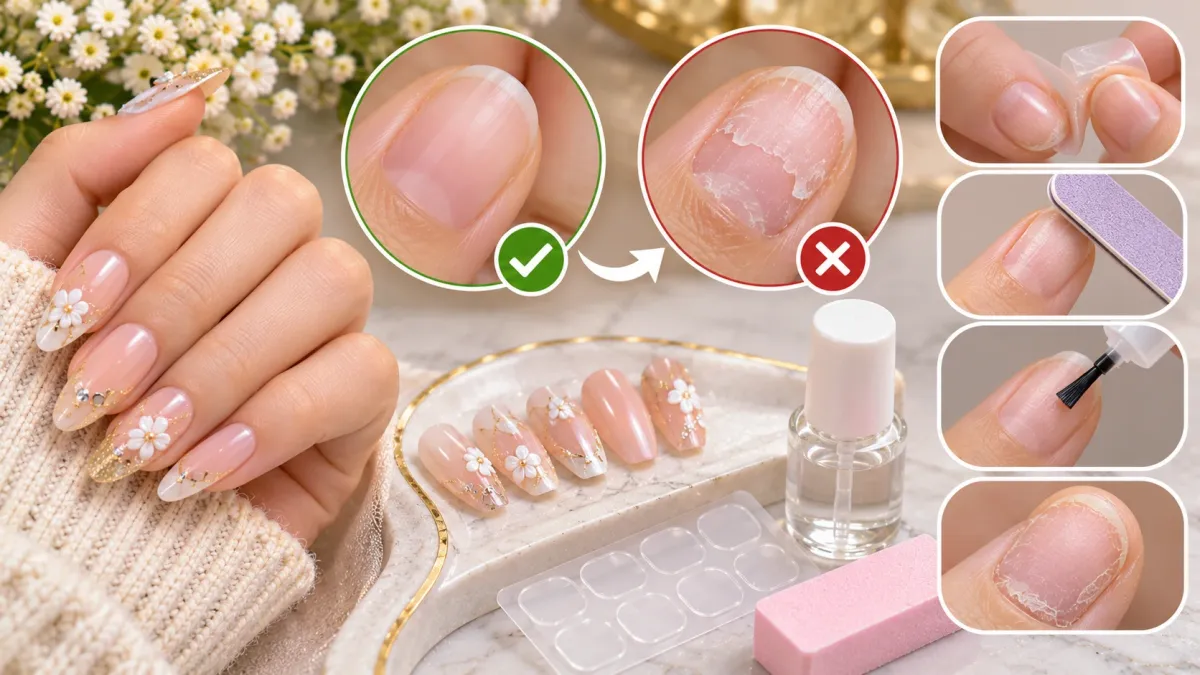
Press-On Nails vs Acrylic Nails: Cost, Wear & Nail Health Compared
Quick answer
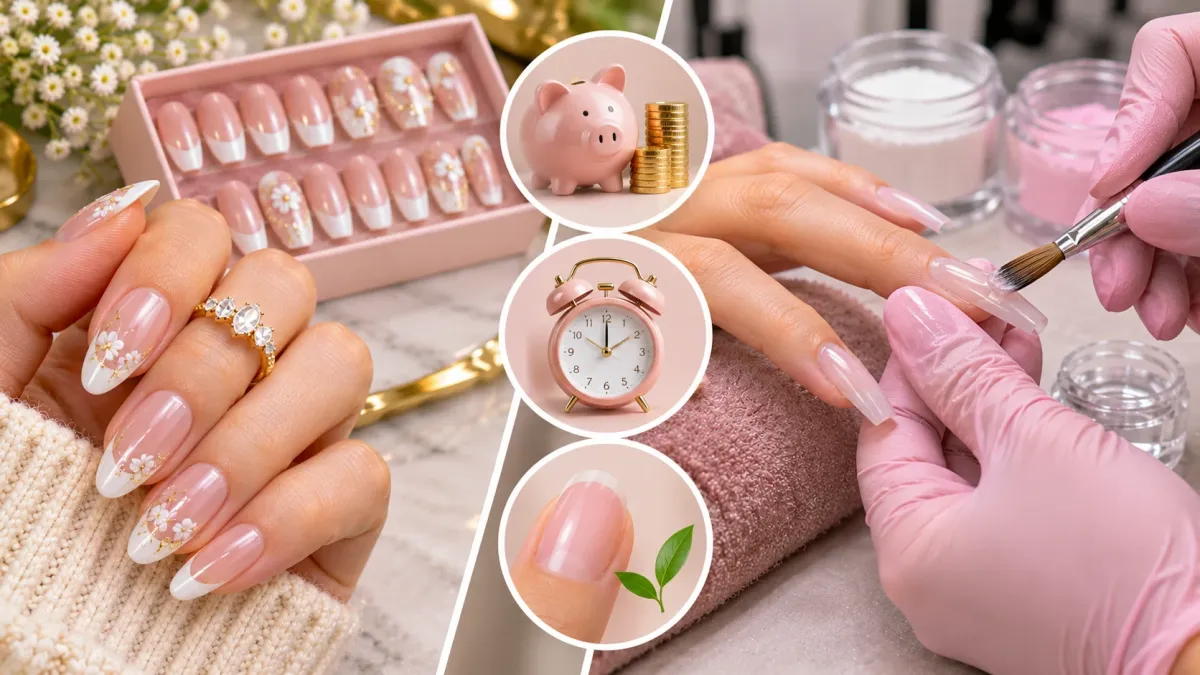
Press-on nails are cheaper, faster and usually gentler on your natural nails than acrylics, because they need no heavy filing and come off with soaking. Acrylics last longer, typically two to three weeks before a fill, and stand up better to heavy hand use, but they cost more and need salon upkeep.
In this guide
- Press-on nails vs acrylic: the quick verdict
- Press-ons vs acrylics side by side
- How each one is applied
- Cost: press-on nails vs acrylic
- A month of press-ons vs a month of acrylics
- Wear and durability
- Which is better for your natural nails?
- Which looks more natural: press-ons or acrylics?
- Can press-ons be filled or repaired like acrylics?
- Look, length and design
- Which should you choose?
- How to switch from acrylics to press-ons
- Sources
Acrylics have been the standard for length and strength for decades, and it is easy to see why people love them. The real question is whether a good set of press-ons can do the same job for less money and less wear on your nails. Often it can. Sometimes it cannot.
Here is an honest comparison of press-on nails and acrylic nails on cost, wear time, application, removal and nail health, so you can choose the one that fits your life. If you are not sure what makes a press-on different in the first place, start with my press-on nails explainer.
Press-on nails vs acrylic: the quick verdict
Choose press-on nails if you want low cost, quick application at home, frequent design changes and gentler wear on your nails. Choose acrylics if you need the strongest, longest-wearing nails for heavy daily use and do not mind regular salon visits.
For most people who want nice nails for work, events and weekends, press-ons are the better value. For people who use their hands hard all day and want one set to last for weeks, acrylics still win on durability.
Press-ons vs acrylics side by side
| Compared on | Press-on nails | Acrylic nails |
|---|---|---|
| What it is | Ready-made nails you attach | Liquid and powder sculpted on your nail |
| Who applies it | You, at home | Usually a nail tech |
| Time | About 15 to 30 minutes | About 60 to 75 minutes for a full set |
| Cost | About $5 to $30 per set | About $40 to $85 per full set, plus fills |
| Wear | A few days with tabs, about 1 to 2 weeks with glue | About 2 to 3 weeks before a fill |
| Upkeep | None; replace the set | Fills every 2 to 3 weeks |
| Removal | Soak in warm soapy water or acetone | Long acetone soak or filing |
| Nail prep | Light buff only | Nail filed until rough |
| Reusable | Often | No |
Acrylic prices and timing come from a 2026 US price breakdown by DTK Nail Supply, which puts a full set at $40 to $85. Press-on prices come from Glamnetic, which puts most sets at $5 to $30. Local salon prices vary a lot, so check yours.
How each one is applied
Acrylic nails are built on your nail by a nail tech, while press-ons arrive finished and are simply attached. That difference drives almost every other point in this comparison.
For acrylics, the tech mixes a liquid monomer with a powder polymer into a bead and sculpts it onto your nail, often over a plastic tip for extra length. To help it stick, the natural nail is roughened first. The American Academy of Dermatology notes that this filing thins your natural nails, making them weaker.
For press-ons, you choose a size for each finger, clean and lightly buff your nails, and attach each tip with glue or tabs. There is no sculpting and no drill. My beginner application walkthrough shows the whole process step by step.
Cost: press-on nails vs acrylic
Press-on nails cost far less per set than acrylics, and they have no maintenance appointments. Glamnetic puts most press-on sets at $5 to $30, with many good options under $20. An acrylic full set costs more than most press-on sets, and then the fills start.
The fills are the part people forget. Acrylics need a fill every two to three weeks as your nails grow, and each fill is a new bill. ThePricer's 2026 manicure guide lists acrylic fills at about $30 to $50, plus $10 to $25 or more for professional removal. A press-on set has no fill; when it grows out, you take it off and put on a new one or reuse it.
A month of press-ons vs a month of acrylics
Looking at one month makes the difference in money and time easier to see. The table uses the same sources as above.
| Over a month | Press-on nails | Acrylic nails |
|---|---|---|
| What you pay for | A new or reused set every 1 to 2 weeks | A full set, then a fill every 2 to 3 weeks |
| Price each time | About $5 to $30 per set | $40 to $85 for a full set; about $30 to $50 per fill |
| Time each time | About 15 to 30 minutes at home | About 60 to 75 minutes in the chair for a full set, plus travel |
| Removal | At home, usually with soap, oil or acetone you already have | About $10 to $25 or more at a salon |
On those figures, a first month of acrylics, with one full set and one fill, comes to about $70 to $135. Two glued press-on sets in the same month come to about $10 to $60, and less again if you reuse a set. I work through a full year of costs, including handmade sets and salon visits, in my guide to what press-ons really cost compared with the salon.
Wear and durability
Acrylics last longer and handle rough use better. A well-done set holds for two to three weeks before it needs a fill, and the hard acrylic layer resists knocks that would pop off a press-on.
Press-ons last about one to two weeks with glue and less with tabs. They can match acrylics for a week of normal life, but heavy hand work, long hours in water and very long lengths shorten their wear. If durability is your main worry, read my breakdown of press-on wear times by adhesive before deciding.
Which is better for your natural nails?
Press-on nails are usually easier on your natural nails than acrylics, provided you remove them gently. They need only a light buff, and most sets come off with warm, soapy water and oil instead of a long acetone soak or filing.
Acrylics involve more filing at application, at every fill, and often at removal. The AAD lists thin, brittle nails among the effects of artificial nails in general and warns that frequent touch-ups can seriously damage natural nails.
Both options carry the same two shared risks: an allergy to acrylate ingredients, and damage from pulling a nail off before it is ready. I explain both, with what dermatologists say, in how press-ons affect your natural nails.
Which looks more natural: press-ons or acrylics?
Both can look natural, and both can look obviously fake. What decides it is the thickness at the cuticle, the fit at the sides and how the nail grows out.
Acrylic is sculpted on your own nail, so a skilled tech can blend it smoothly at the cuticle and shape it to your nail. The catch comes later: DTK Nail Supply notes that acrylic grows out with a hard growth line, which is why fills are needed every two to three weeks. Until the fill, that line at the base is the giveaway.
A press-on sits on top of your nail, so its look depends on the tip. A thin edge placed right at the cuticle, sides that match your nail width and a short or medium length look the most real. When I want a set to pass for natural nails, I choose a thin tip in a soft shape such as oval or almond, in a sheer or nude shade. My full routine for making press-ons look natural covers sizing, filing and finishing.
Can press-ons be filled or repaired like acrylics?
Press-ons cannot be filled. When your nails grow out, you take the set off and apply a new one, or clean the same set and wear it again. In practice that replaces the fill appointment, and my guide to reusing a press-on set shows how to prepare it.
Repairs are simpler too. If one press-on pops off, you can stick it back on at home in a few minutes, which I explain in reattaching a single press-on. A lifted or broken acrylic is usually a salon job, because the tech has to file and rebuild that nail.
Look, length and design
Acrylics can be sculpted to almost any length, shape and thickness, and a skilled tech can create 3D art directly on your nails. Press-ons come in fixed shapes and lengths per box, but the range is huge, and handmade sets can match salon art closely.
Where press-ons have the edge is variety. You can wear a different design every week without paying for a new salon set. If you want to experiment with shapes first, my guide to choosing a press-on nail shape helps you pick one that suits your hands.
Which should you choose?
Choose press-on nails if you:
- change designs often or want nails for an event
- want to spend less and skip salon appointments
- want a gentler option for your natural nails
- are comfortable doing a careful 20-minute application at home
Choose acrylics if you:
- need very long, very strong nails for weeks at a time
- use your hands hard all day, with lots of water or tools
- enjoy the salon visit and do not mind fills every few weeks
Some people use both: acrylics for a long vacation, press-ons for the rest of the year. When someone asks me to choose for them, I start with one question: how hard do your hands work in a normal week? Hours in water or with tools point to acrylics; almost everything else suits press-ons. If you are also weighing up gel, my comparison of press-on nails and gel manicures covers that choice.
How to switch from acrylics to press-ons
Switching is easy if you give your nails a short reset first. Here is the routine I recommend:
- Have the acrylics removed properly, ideally by a nail tech, and never pry them off.
- Give your nails a short break, keep them short, and moisturize daily while they recover. My routine for recovering nails between sets works just as well after acrylics.
- Start with tabs or a short length while your nails are still a little thin, then move to glue and longer lengths once they feel strong.
- Size carefully. Nails that were under acrylic are often flatter and thinner at first, so check the curve of each tip.
Prices checked: November 2026. Prices change often, so check before you buy.
Sources
Frequently asked questions
Are press-ons better than acrylics?
For cost, convenience and gentleness on your nails, press-ons usually come out ahead. Acrylics are better if you need the strongest, longest-lasting nails for weeks of heavy hand use.
Do press-on nails last as long as acrylics?
Not usually. Acrylics typically go two to three weeks before a fill, while glued press-ons last about one to two weeks. Good prep and a short length bring press-ons closer.
Are press-ons cheaper than acrylics?
Yes. A drugstore press-on kit often costs less than a single acrylic fill, and press-ons have no maintenance appointments. Even handmade press-on sets often cost less than an acrylic full set.
Can you put press-on nails over acrylic nails?
Gluing press-ons over acrylics is not a good idea. Press-ons are made to sit on clean natural nails, and gluing them over acrylics adds thickness and makes the eventual removal of both harder.
Do acrylics damage nails more than press-ons?
Acrylics usually involve more filing at application, fills and removal, which can thin the nail over time. Press-ons need only a light buff, so they are generally gentler when removed by soaking.

Written by Ome Jack
I'm Ome Jack, the owner and writer of OmeNails. I've worked with nails for 11 years and run my own nail business. Here I write step-by-step guides on choosing, applying, fixing and removing press-on nails, based on years of hands-on work with real clients'…
More about Ome