Types of Press-On Nails Explained: ABS, Soft Gel, Handmade & Drugstore
Quick answer
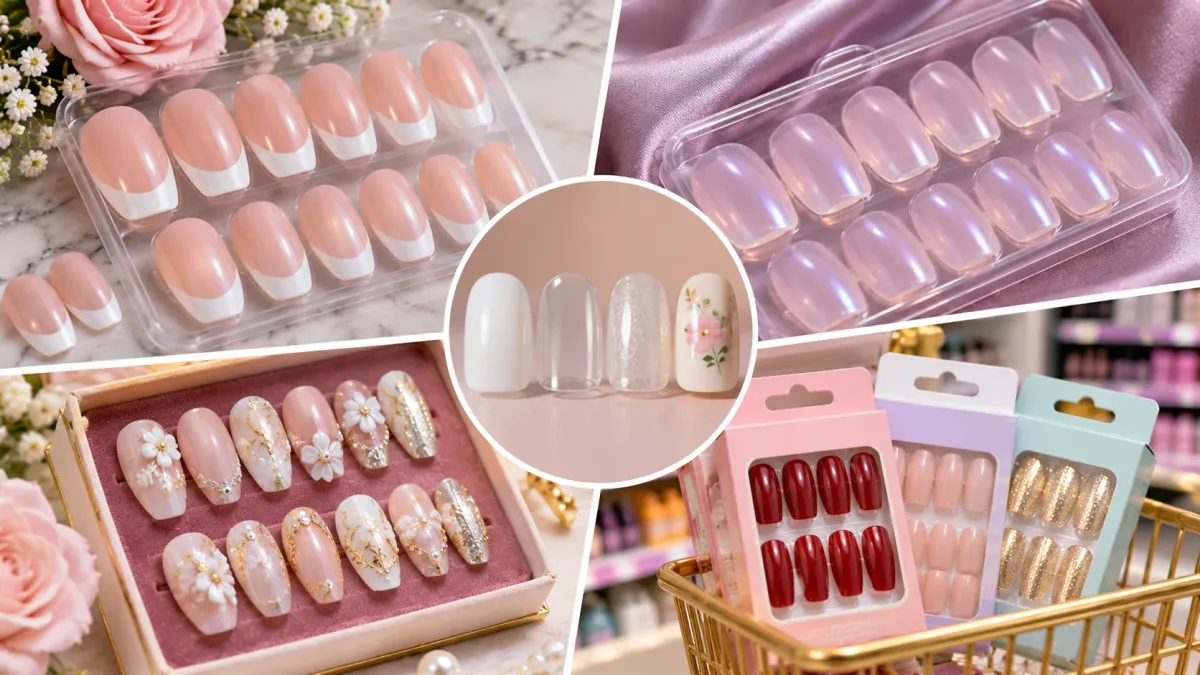
The main types of press-on nails are drugstore sets made of ABS plastic, pre-glued sets with adhesive already on each nail, soft gel sets that are thinner and more flexible, and handmade sets painted by a nail artist with gel polish. They differ in fit, wear time, reusability and price.
In this guide
Almost every press-on set falls into one of four types. Once you know which type you are looking at, you know roughly how it will fit, how long it will last and whether you can wear it again.
If you are brand new to all of this, start with my overview of what press-on nails are and what they are made of. Here I go one level deeper into each type and the trade-offs that come with it.
Types of press-on nails at a glance
The four types of press-on nails differ mostly in material, adhesive and how much handwork goes into them. This table sums them up.
| Type | Usual material | How it attaches | Reusable? | Typical price per set |
|---|---|---|---|---|
| Drugstore | ABS plastic | Glue or tabs in the box | Sometimes | Often under $20 |
| Pre-glued | ABS plastic | Adhesive already on each nail | Usually not | Similar to drugstore |
| Soft gel | Soft gel or gel-like plastic | Glue, tabs or gel adhesive | Often | Varies by brand |
| Handmade | Gel tips layered with gel polish | Glue or tabs | Yes, many times | Usually more than drugstore sets |
Prices vary widely. The imPRESS site, for example, lists its Astound kit at $9.49 before any sale. Handmade sets cost more because of the handwork; one handmade shop lists a custom handmade set at about $29 (around $19 on sale). Prices change by store and design, so use these as a guide only.
Drugstore press-on nails (ABS plastic)
Drugstore press-on nails are the classic boxed kits you find in pharmacies and supermarkets, and almost all of them are made of ABS plastic. ABS is light, tough and easy to file, which is why brands from Kiss to OPI use it.
A typical box holds enough tips to cover every finger with spares. Olive & June's press-on boxes, for example, hold 42 nails in 21 sizes. That range is what makes drugstore sets work for so many hands: you pick the closest size for each finger and file the rest.
What I like: they are affordable, easy to find, come in every shape and length, and are perfect for practicing your application. What to watch: the curve is made for an average nail, so if your nails are very flat or very curved, the fit at the sides may not be perfect. A firmer tip on a curved nail can also put pressure on the sides, which some people feel as a pinch.
Best for: beginners, trying a new shape or length cheaply, and short-term looks.
Pre-glued press-on nails
Pre-glued press-on nails have an adhesive layer already on the back of each nail, so you peel off a film and press. imPRESS and Dashing Diva's Magic Press are the best-known examples. Dashing Diva describes the adhesive on its Magic Press nails as pressure sensitive: the more firmly you press, the better it holds.
They are the fastest type to apply, and they are easy to take off. The trade-off is reuse: imPRESS says its nails are not reusable, because the flexible tip distorts when you remove it. Its wear time is up to 7 to 10 days, since the brand's product pages say up to 7 and its FAQ says up to 10. Pre-glued sets are ideal when you want a neat manicure for a week or less and do not want to handle liquid glue at all.
Best for: speed, travel, and anyone nervous about using nail glue.
Soft gel press-on nails
Soft gel press-on nails are made from a softer, gel-like material that bends a little with your natural nail. They are usually thinner than ABS tips, and many people find them more comfortable and more natural looking, especially at the cuticle.
The name covers two slightly different products. Some soft gel sets are worn like any other press-on, with glue or tabs and no lamp. Others are part of a salon-style system where a gel adhesive is cured under a UV or LED lamp. Aprés Gel-X is the best-known version of that system: full-coverage soft gel tips that soak off with acetone.
What I like: the thin edge and flexible feel. What to watch: sets cured with gel adhesive need acetone and patience to remove, and a lamp to apply. If this type interests you, my guide to applying soft gel tips covers both the no-lamp and lamp methods.
Best for: a thin, natural finish and longer wear.
Handmade (custom) press-on nails
Handmade press-on nails are designed and painted by a nail artist, usually on gel tips, using the same gel products a salon would use. The design is built up on the tip in layers of gel polish, sculpting gel and top coat, with decorations set into the gel and each gel layer cured under a lamp.
Because each set is made for one person, it usually comes as 10 nails in your exact sizes rather than a box of 24 or 30. Artists ask you to measure your nails first, or send a sizing kit. For a custom set, I size from clear sizing tips on bare nails rather than from tape alone, and I note any finger that falls between two sizes, so that nail can be made a size up and filed to fit. Accurate numbers matter a lot here, so read my steps for measuring your nails for a custom set before you order.
What I like: the strength of the gel layers, detailed art you cannot get in a store, and reuse. A well-made handmade set can be worn many times if you remove it gently. What to watch: higher prices, a wait while the set is made, and sizes that cannot be returned if you measure wrong.
Best for: special events, detailed art, and people who want one set to wear again and again.
My tip: before buying an expensive handmade set, wear a cheap drugstore set in a similar shape and length for a few days. You will learn whether you actually like that length in daily life, and it costs a fraction of the price.
Other press-on variations you will see
Beyond the four main types, you will see a few variations on store shelves. They are versions of the same products rather than new types:
- Clear tips (often PMMA or clear soft gel): blank tips for painting your own designs. They are the starting point if you want to make press-on nails at home.
- Short and natural kits: sets made in short square, oval or squoval shapes for everyday wear and work.
- Toenail press-ons: wider, flatter tips sold in pedicure kits.
- Kids' press-ons: small, short tips usually attached with tabs only.
How to judge quality in any type of press-on
Quality shows in the same five places whatever the type, and you can check most of them before you buy or in the first minute after opening the box.
- The cuticle edge. Look at the end that sits near your cuticle. A thin, smooth edge blends into your nail; a thick, blunt edge leaves a visible step.
- The underside. Run a fingertip inside the tip. It should feel smooth, with no ridges or bumps that would stop the adhesive touching your nail evenly.
- The number of sizes. More sizes mean a better chance of a close fit for every finger. Ten or more sizes in a boxed kit is a good sign.
- The curve. Hold a tip against your nail. It should rest along the sides without rocking. A tip that only touches in the middle will lift.
- The finish. Check for even color, clean lines in the design, and decorations that are sealed in rather than sitting loose on top.
None of these depend on price. An inexpensive kit can pass every check and a costly set can fail several, so judge the nail in your hand, not the label.
Which type of press-on nails should you choose?
The right type of press-on depends on how long you want to wear it, how much you want to spend, and whether you plan to reuse it. This is how I would decide:
- Your first set ever: a drugstore ABS kit in a short or medium length. Practice the fit before spending more.
- A neat set for a few days with no glue: pre-glued.
- The most natural look: soft gel in your exact sizes.
- A wedding, birthday or photo shoot: handmade, ordered well in advance.
- Wearing the same design many times: handmade or a good soft gel set with tabs.
Two things matter more than the type. The first is fit: any type will lift if the size is wrong. The second is how you take it off, which decides whether your nails stay healthy. My guide to what really causes nail damage from press-ons explains the habits that protect your nails. Wear time also varies a lot by type and adhesive; I give realistic numbers in how long each kind of press-on lasts.
Prices checked: November 2026. Prices change often, so check before you buy.
Sources
Frequently asked questions
What is the difference between ABS and soft gel press-on nails?
ABS press-ons are made of a firm, light plastic that holds its shape and files easily. Soft gel press-ons are thinner and bend slightly with your natural nail, which many people find more comfortable and natural looking.
Are handmade press-on nails worth the price?
Handmade sets cost more because an artist paints each one with gel products, often in your exact sizes. If you will wear the design several times or want detailed art, the higher price can work out well per wear.
Can you reuse drugstore press-on nails?
Sometimes. Glue-on ABS nails can often be cleaned and worn again if you soak them off gently. Pre-glued nails are usually single use because the tip bends out of shape when removed.
Which type of press-on nails lasts the longest?
Sets attached with nail glue or a cured gel adhesive usually last longest, often around one to two weeks or more. Pre-glued sets and tabs are made for shorter wear, and your prep and daily habits change the result a lot.
What type of press-on nails is best for beginners?
A drugstore ABS kit in a short or medium length is the easiest place to start. It is affordable, comes with many sizes, and lets you practice sizing and application before you buy a premium set.
Written by Ome Jack
I'm Ome Jack, the owner and writer of OmeNails. I've worked with nails for 11 years and run my own nail business. Here I write step-by-step guides on choosing, applying, fixing and removing press-on nails, based on years of hands-on work with real clients'…
More about Ome